
What She Does All Day
A year with a DMZ moon bear

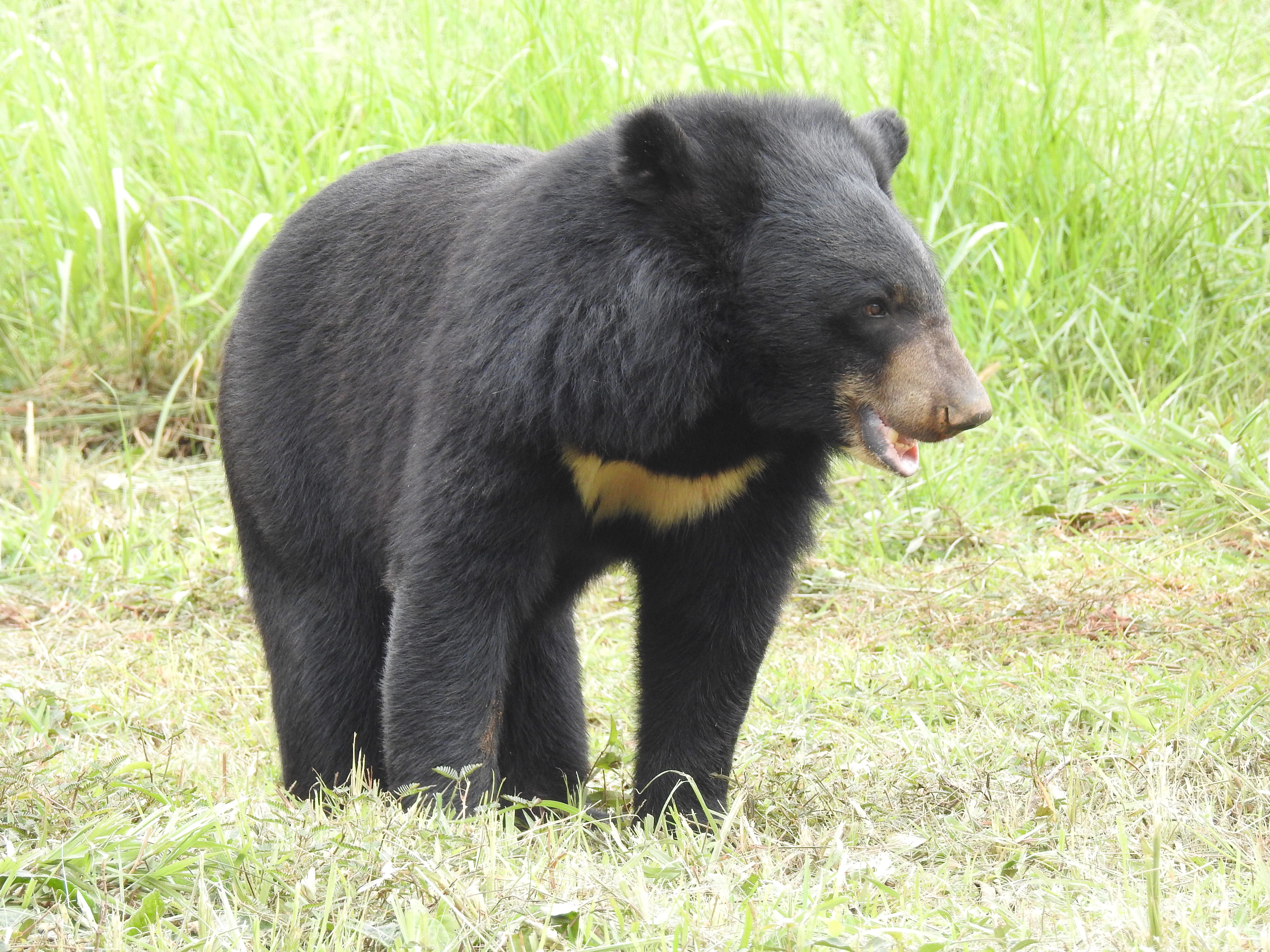
Photo: Dr. Raju Kasambe, CC BY-SA 4.0, via Wikimedia Commons
In late autumn, she stops eating. For weeks before that, she has barely stopped — acorns and other nuts, as many as she can find. That food turns into fat. The fat will get her through winter, when she won’t eat at all.
She finds a den — a hollow tree, or a crack in the rocks — and settles in. At first she sleeps lightly. She could still wake up easily. But soon her sleep gets much deeper. Her heart, which beats 40 to 70 times a minute when she’s awake, slows to just 8 to 12 beats a minute. Her body temperature drops a little. Her whole body slows down to save energy. [1]
If she mated the summer before, this is also when she gives birth — right there in the den, in the coldest part of winter. Her cubs are tiny. Their eyes stay shut for more than a week.
Asiatic black bears have an unusual trick: the fertilized egg waits months before it starts to grow. It only begins developing in autumn. That way, birth happens safely inside the den, not out in the open forest. [2]
She won’t eat again until spring. By then, she may have lost almost half her body weight. [1]
Spring
She comes out of the den sometime in spring. In Jirisan National Park, where Korea keeps close track of its bears, mothers with new cubs are usually first spotted outside the den in May. They’re thin. They’re careful. The cubs stumble along beside them. [3]
For weeks after that, everything she does centers on the cubs. They won’t stop nursing for another two months or so. And they’ll likely stay near her for a year or more after that — learning, just by watching, which trees are worth climbing, which slopes have food, which sounds mean danger. [4]
Summer
Summer is the season of green. Studies of Asiatic black bears elsewhere — tracked with GPS collars and studied through their droppings — show that from early spring into midsummer, they eat mostly green plants: young shoots, leaves, soft new growth. It keeps them fed. It doesn’t build much fat. [5]
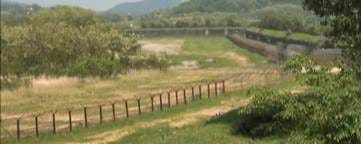
It’s also a season when she might not see a single person. No one has lived inside the DMZ for seventy years. Except for the landmines, it’s close to ideal habitat for a bear — quiet, undisturbed, mostly left alone. [6]
Autumn — and what we actually know
It was in this same season — October — that a real bear like her was actually caught on camera. On October 12, 2018, a camera trap set up by the National Institute of Ecology, working with the military, recorded a young bear crossing a stream in the eastern DMZ. It weighed an estimated 25 to 35 kilograms and was about 8 or 9 months old. It was the first confirmed photo of a wild Asiatic black bear living inside the DMZ. [7]
Researchers at the time reasoned that a cub that young wouldn’t be alone. Mother bears usually raise one or two cubs at a time. So they guessed that at least three bears — the cub, plus at least one parent — were probably living in the DMZ. That was a careful guess, not an exact count. It has never been officially updated. [8]
Since then, more has been confirmed. Camera traps caught adult bears at four different spots inside the eastern DMZ in 2020 and 2021 — about 6.2 kilometers from where the 2018 cub was filmed. Nobody knows yet if these are the same bear, grown up, or different ones. To find out, researchers would need fur or droppings for genetic testing, and they’re still working with the military to collect them. Either way, in 2022 the Ministry of Environment confirmed that bears have now been seen in the DMZ for two years running. [8]
Why we tell it this way
We don’t know her name. We don’t know exactly where she dens, or how many winters she’s lived through. What we do know is this: a species South Korea once wrote off as gone is quietly surviving in the one place on the peninsula that almost nobody can reach.
That’s the whole point of this newsletter, really. The DMZ’s wildlife and the case for peace on this peninsula aren’t two different stories. They keep turning out to be the same one.
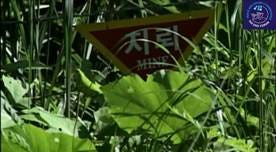
She still faces real dangers — landmines most of all, in ground that was never fully cleared and probably never will be. Researchers are also trying to understand how far she and other bears travel, including whether some cross into areas near Kumgangsan in North Korea, where bears are also believed to live. We’ll keep following that research.
A note on how this piece was written
This is a composite, not a record of one tracked bear — no such data yet exists for the DMZ population. Every seasonal detail above is drawn from published research on Asiatic black bear (Ursus thibetanus) biology, cited by number and listed in full below; passages describing her specific movements extrapolate from documented species behavior, not an observed event.
Sources
[1] Kim, M.W., Jeong, D.H., Yeon, S.C. (2020). “Hibernation behaviour and ethogram of captive Asiatic black bear (Ursus thibetanus).” Species Restoration Technology Institute, Korea National Park Service. View paper (ResearchGate)
[2] Garshelis, D. & Steinmetz, R. (2020). Ursus thibetanus. The IUCN Red List of Threatened Species. View assessment | Animal Diversity Web species account
[3] Korea National Park Service — Asiatic black bear reintroduction and monitoring program, Jirisan National Park. View program page (Korean)
[4] Species biology summaries: IUCN Red List assessment | A-Z Animals species profile
[5] GPS-collar and scat-based seasonal diet study of Asiatic black bears, Nagano Prefecture, Japan, 2016–2020. View paper (NCBI/PMC)
[6] Ministry of Environment (환경부) and National Institute of Ecology (국립생태원), DMZ biodiversity survey report — 5,929 species confirmed, including 101 endangered species. View summary
[7] Ministry of Environment / National Institute of Ecology finding, reported May 8, 2019 — first confirmed camera-trap photo of a wild Asiatic black bear cub in the eastern DMZ (Oct. 12, 2018). SBS News report (Korean)
[8] Ministry of Environment / National Institute of Ecology finding, reported January 24, 2022 — bear presence in the eastern DMZ confirmed for a second consecutive year (camera-trap data, 2020–2021); researchers’ 2019 estimate of “at least three” bears. 환경일보 report (Korean)